Key Features
185nm UV Output — Short-wave ultraviolet for semiconductor fabrication processes
High-Intensity UV-C — Designed for precision industrial applications
OEM Replacement — Genuine Photoscience part number 7961W
PAT/7961W Crossover — Also available as PAT/7961W
Wafer Fab Grade — engineered for cleanroom semiconductor environments
Applications
Semiconductor Wafer Fabrication — UV photolithography and surface treatment
Surface Sterilization — Microbial reduction in manufacturing environments
UV Ozone Generation — 185nm wavelength produces ozone for oxidation processes
Water Treatment Systems — TOC reduction in ultrapure water systems
Compatible Equipment
The Photoscience 7961W lamp is designed for wafer fab application systems requiring 185nm UV output. It serves as a direct replacement for the PAT/7961W variant.
Technical Notes
The 185nm wavelength is specifically chosen for semiconductor manufacturing processes where UV-induced photochemical reactions are required. This short-wave UV creates ozone from atmospheric oxygen, which aids in organic compound decomposition and surface cleaning.
Key Features
185nm UV Output — Short-wave ultraviolet for semiconductor fabrication processes
High-Intensity UV-C — Designed for precision industrial applications
OEM Replacement — Genuine Photoscience part number 7961W
PAT/7961W Crossover — Also available as PAT/7961W
Wafer Fab Grade — engineered for cleanroom semiconductor environments
Applications
Semiconductor Wafer Fabrication — UV photolithography and surface treatment
Surface Sterilization — Microbial reduction in manufacturing environments
UV Ozone Generation — 185nm wavelength produces ozone for oxidation processes
Water Treatment Systems — TOC reduction in ultrapure water systems
Compatible Equipment
The Photoscience 7961W lamp is designed for wafer fab application systems requiring 185nm UV output. It serves as a direct replacement for the PAT/7961W variant.
Technical Notes
The 185nm wavelength is specifically chosen for semiconductor manufacturing processes where UV-induced photochemical reactions are required. This short-wave UV creates ozone from atmospheric oxygen, which aids in organic compound decomposition and surface cleaning.

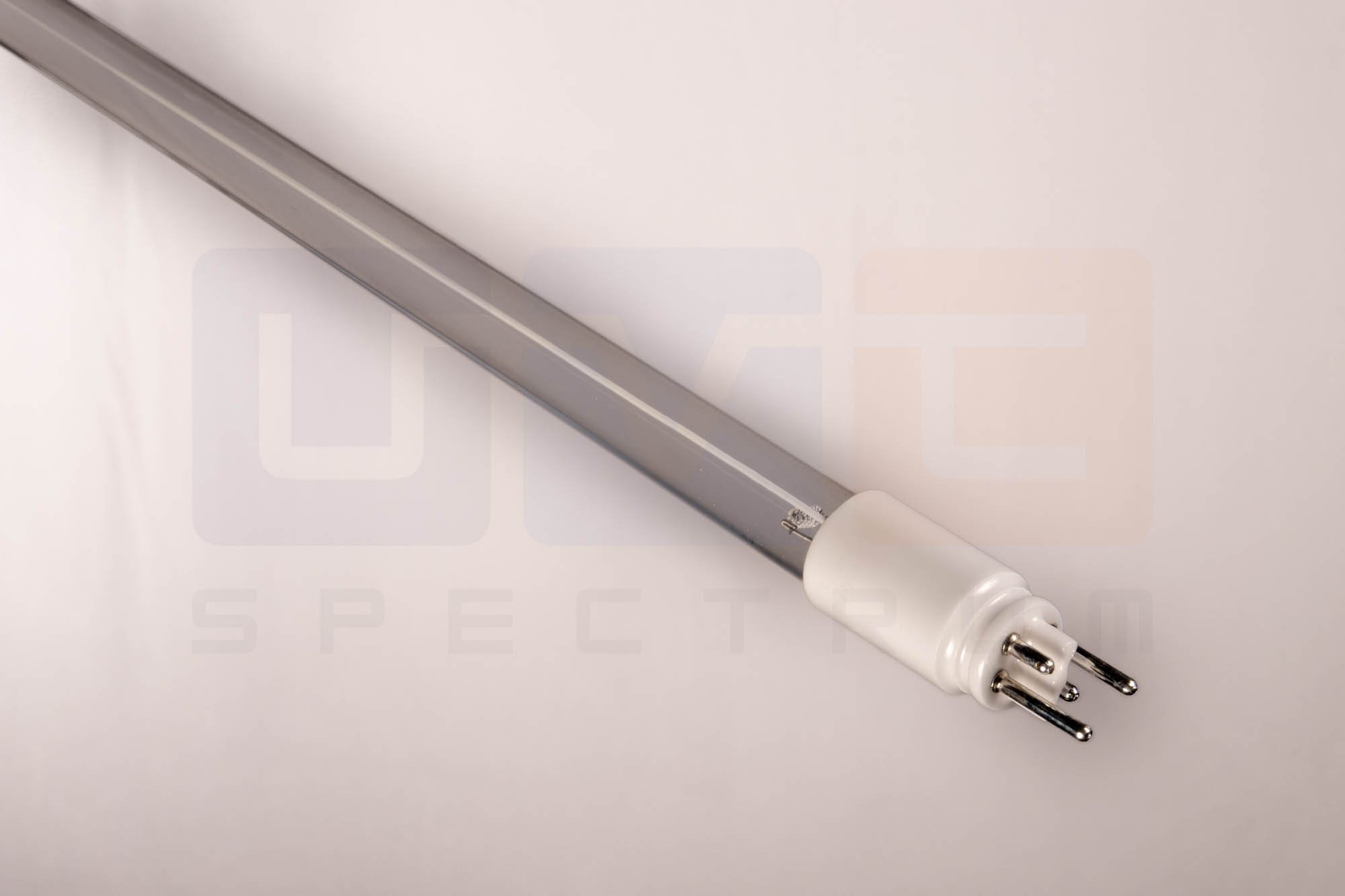 Image 1 of 1